

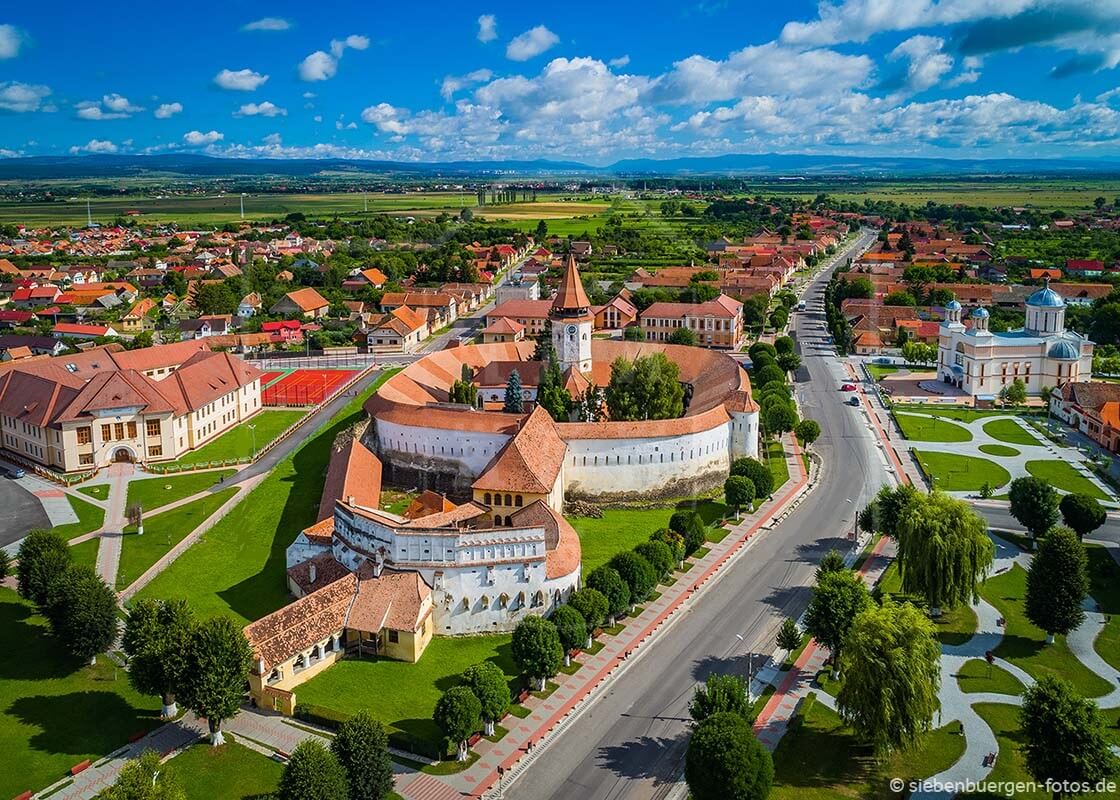
Location: Village Prejmer, in Transylvania region – Central Romania
Address: Strada Mare 2, village Prejmer - Brasov county
Nearest city: Brasov (12 miles southwest)
Nearest train stations: Brasov, Prejmer
Prejmer (Tartlau Kirchenburg in German) is the largest fortified church in southeastern Europe. It was erected, in a cross-shaped plan, by the Teutonic knights in 1212-1213. Later, Cistercian-style decorations were added. The nave features late-gothic vaulting.
Access to the courtyard was through a 100-foot long arched passage secured by two rows of gates. The red-roofed fortification have 275 rooms, on four stories, connected by wooden staircases. Each family in the village had a designated room, in the fortress, to store its provision and for use as a shelter, in case of an enemy attack. The storage rooms of the fortress were used by the citizens of Prejmer until early 20th-Century. A horse-powered mill and a bakery functioned inside the fortress providing fresh bread for the community even when fortress was under attack by enemies.
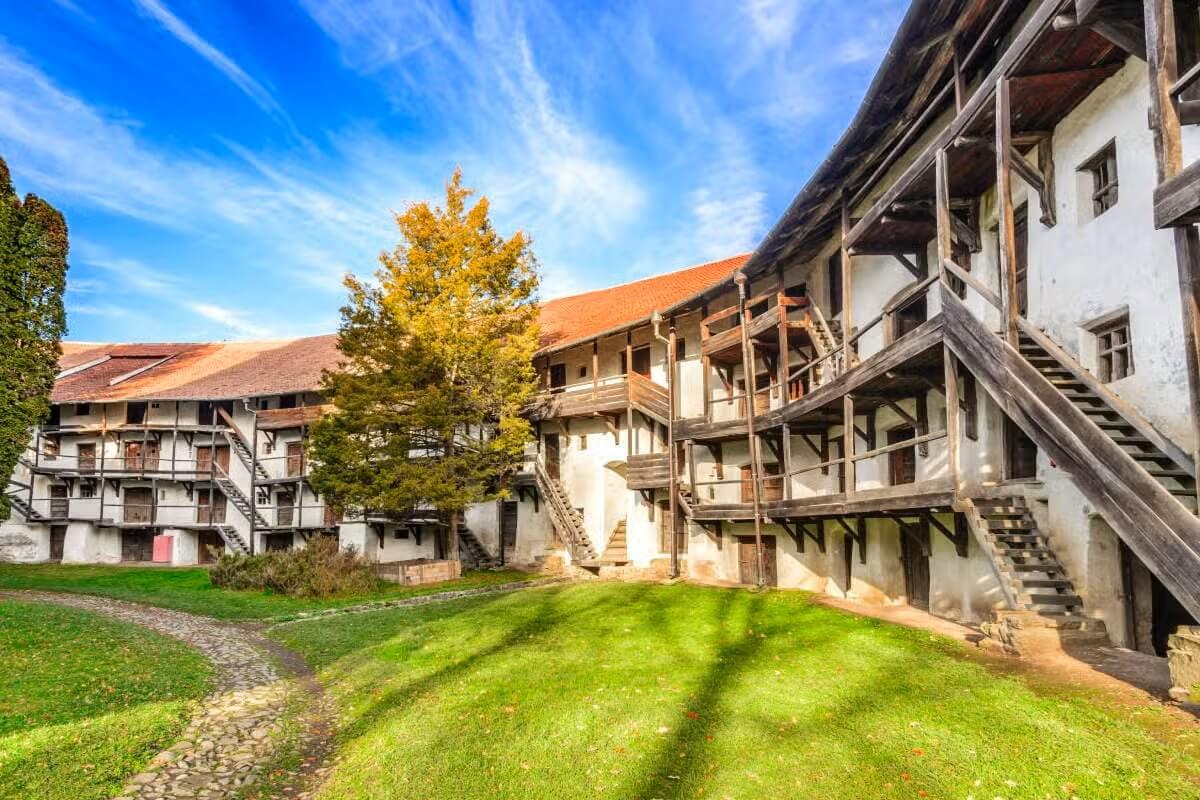
40-feet high / 12-feet thick defending wals protect the oval-haped courtyard of the church;
they were once surrounded by a 18-feet deep / 25-feet wide, water ditch.
Bastions, drawbridges and a secret, subterranean, passage are part of Prejmer stronghold defense system.
Prejmer fortress most-feared war device was the "death machine,"
made of several fire-weapons that could shoot simultaneously, causing the enemy significant losses.
Historical records attest that in its 500 years of existence, the fortress was besieged over 50 times.
However, it was only captured once, in 1611, by Gabriel Báthori, Prince of Transylvania;
the fighters defending the fortress have surrendered after several days without any drinking water.
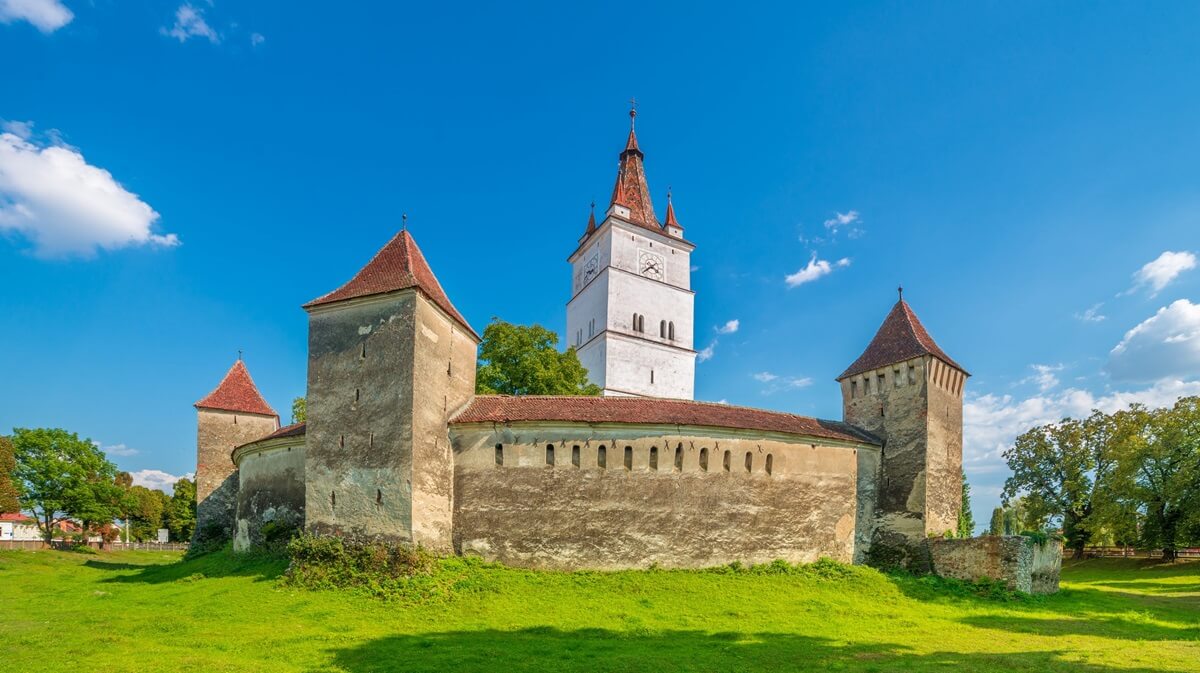
Prejmer fortified church is a UNESCO - World Heritage Site.
Transylvania fortified churches provide a vivid picture of the cultural landscape of southern Transylvania.
The seven villages/fortified churches inscribed, founded by the Transylvanian Saxons,
are characterized by a specific land-use system, settlement pattern
and organization of the family farmstead that have been preserved since the late Middle Ages.
They are dominated by their fortified churches, which illustrate building styles from the 13th to the 16th century.
(Atribution: UNESCO)
Prejmer Fortress Visiting Hours:
(Program de Vizitare Cetatea Prejmer):
April 1 to October 31:
9 am -- 6 pm (Monday — Saturday)
11 am - 6 pm (Sunday)
November 1 to March 31:
9 am - 4 pm (Monday — Saturday)
11 am - 4 pm (Sunday)
Admission:
Adults: 15 lei ($3.75)
Students: 7 lei ($1.75)
Note:
The church keeper lives in an apartment in the fortress,
visitors who arrive soon after closing time can try to reach him by phone
at (+4) 0749 800 024