

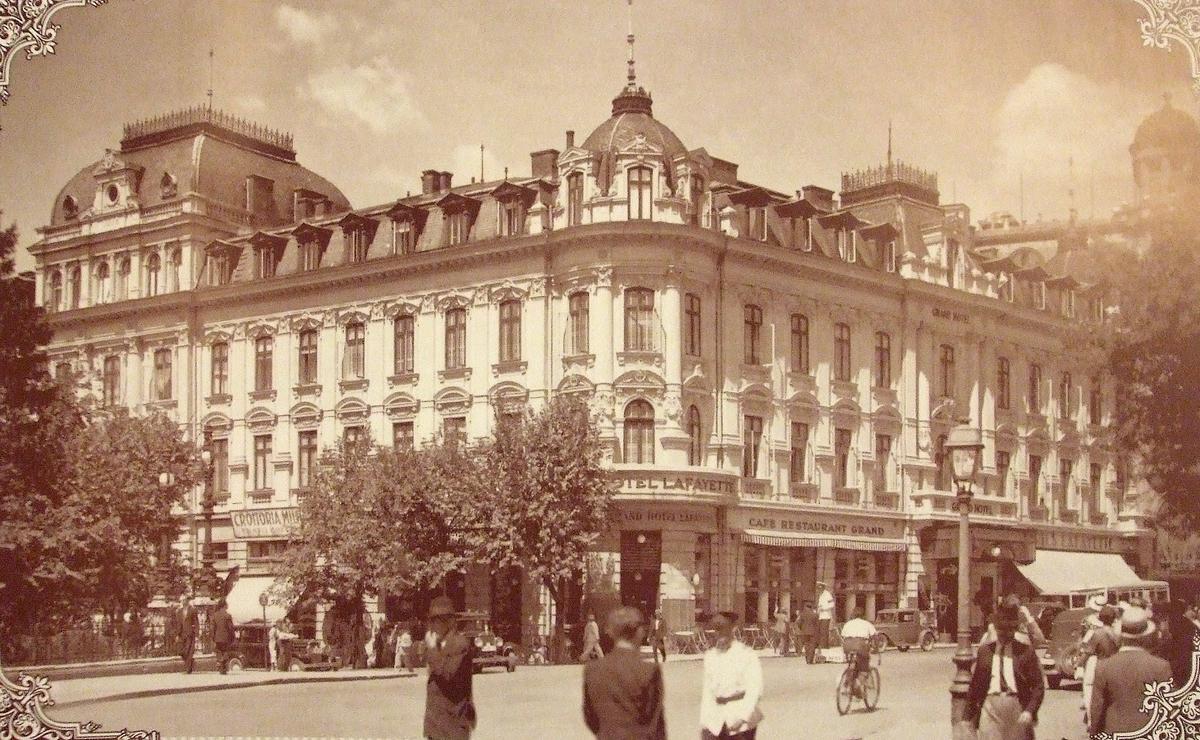
What foreign visitors said about Bucharest at the end of the 19th / beginning of the 20th century:
As early as 1879, Emile-André Lecomte du Noüy - French architect and restorer noticed Bucharest's "power and vitality". It was during his time that Bucharest became known to the “flâneurs” of high-society France as “Little Paris”, for its adoration of all things Gallic in its architecture, academia, and cuisine. (flaneur = a person who saunters around observing society).
“Bucharest has been transformed rapidly with the increasing wealth of its inhabitants and fully deserves now its sobriquet of the “joyful city.” (French geographer Jacques Élisée Reclus - 1883).
In 1905, his compatriot, André Bellessort, French poet and essayist but also an avid traveler
spoke of the "cheerful" character of Bucharest, a city drowned in greenery, of its "interminable" streets,
in which "the hut leans against the mansion wall, the spectre of the hovel against the illusion of the Palace".
The different ethnic groups are not too mixed: there's an Armenian neighbourhood,
a Jewish, a Bulgarian, and areas with Greek street-vendors.
He is impressed by the new public buildings: the National Bank, "the most beautiful temple to blind luck",
The House of Deposits and Consignments, "so gracious, everyone gets enticed
to see art objects deposited there and all of painter Nicolae Grigorescu works",
the Palace of Justice, "capable of holding the pleaders and lawyers of the entire world",
The Post Office Palace, so big it crushes the neighbourhood.
Bellessort also mentions the elegant Bucharest people strolling along
‘Calea Victoriei’ and ‘the Șosea’, then the pompous funerals, where even the poor luxuriate,
and finally, the "gentle morals" of the population.
Another Frenchman, Alphonse Muzet, ingineur, Charge de mission en Orient
- who knew the city around the time of First World War - was impressed by the large number of churches and hospitals.
But what particularly strikes him is the "display of feminine luxury";
the elegant women on the Calea Victoriei are dressed "with a care one finds only in the great capitals."
(Le Monde Balcanique: : Roumains de Roumanie, de Transylvanie et de Bukovine ...)
Count Charles Louis Stanislas de Moüy, French - writer and diplomat - who,
bemused by Bucharest, observed it was difficult to find one’s place in a city whose neighbourhoods
veered so radically from first-world elan to seemingly intractable poverty,
with crooked streets neighbouring a Champs-Élysées-like avenue, luxurious and ox-drawn carriages on the same streets,
elegant people and very poorly dressed bystanders, decrepit shops and fine boutiques, mansions next to huts and shacks.
(Attribution:
JSTOR, nonprofit library for the intellectually curious)
...
Flavors of Old Bucharest
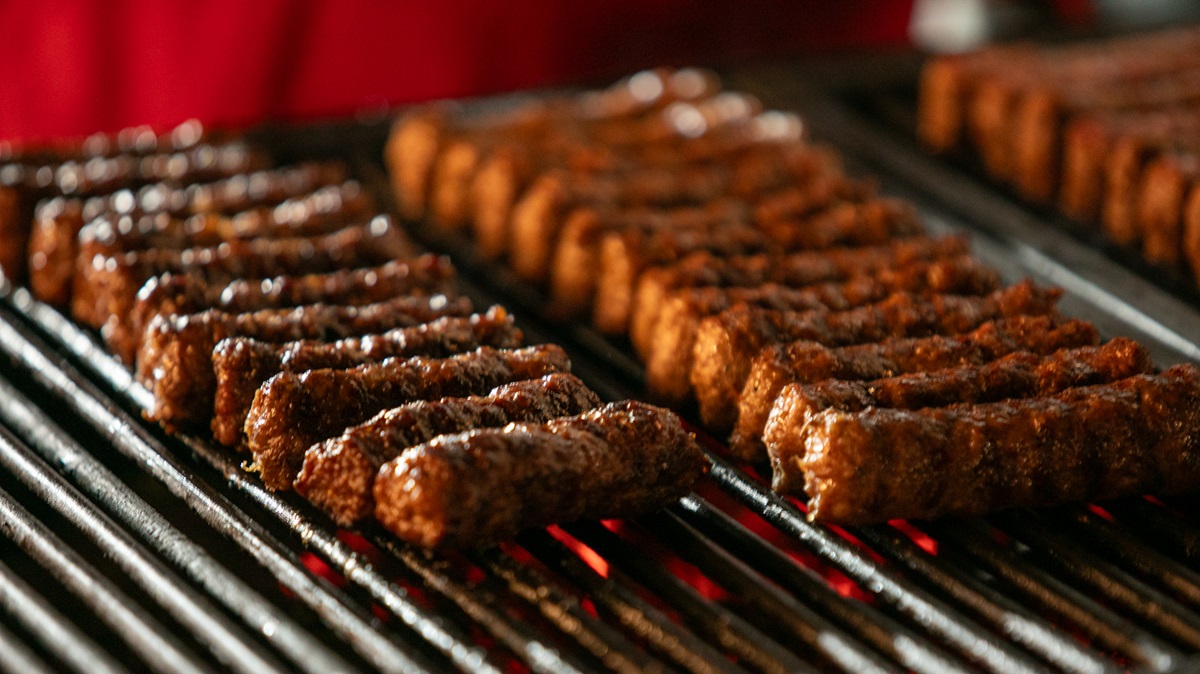
Mititei - 'Littles' or the 'Wee-Ones' - skinless beef sausage.
An immensely popular dish in Romania, the Mititei (Mici for short) were first offered to customers - in the mid-1800s - at Casa "La Trei Frunze de Viță" a Bucharest restaurant known for its delicious traditional dishes and for the atmosphere entertained by the best musicians of the time. Writer Constantin Bacalbașa (1856-1935) states in his book "Bucharest of Another Time" that the "Mititei" were an unplanned variation of a - popular at the time - beef sausage. When the restaurant's owner, ran out of mutton intestine, which he usually used for sausage cassing, he decided to put the meat directly on the grill.
The genuine Mititei are made from beef neck.
If the meat is too lean, some cow's or muton's tallow is added (100 to 150 grams per kg. of meat).
Other ingredients include (thick) beef bone broth (broth obtained from 500 g of bones for each kg of ground beef),
Sodium bicarbonate (8g), lemon juice (one teaspoon), vegetable oil (one spoon), extra fine ground black pepper (8 g.),
dried thyme (12 g.), allspice (2 g.), coriander (2 g.), Turkish cumin (2 g.), star anise (1 g.),
strained garlic juice (one clove, little salt and water / 1 kg of meat).
Meat is twice-grinded then mixed with half of the beef-bone broth. The following ingredients are then added, little by little, in the following order: Sodium bicarbonate, lemon juice, half of the beef-broth and the spices. The original recipe requires mixing/kneading the ground meat for at least one hour.
The meat mixture is refrigerated for 24 hours then removed from the refrigerator
left for a few hours at room temperature then mixed again, for half an hour, with the remaining beef broth.
At the end, the strained garlic juice is added to the mixture which is kneaded, once more, for another 15 minutes.
Meat is refrigerated for another 24 hours.
Getting the Mititei ready to be served:
Meat is removed from the fridge and left at room temperature, for about three hours.
Small skinless sausages (3 inches long and 1.25 inches thick) are hand-shaped and placed on a hot grill (wood embers).
The Mititei need to be medium-cooked, taking care not to dry out the juices that contain spice's flavor.
Some sources indicate that, during grilling, the Mititei are occasionally drizzled with garlic sauce and are flipped three times.
(Attribution: Libertatea.ro)
Orasanu also called "La Idee" (the idea) the popular restaurant "La Trei Frunze de Vita".
Mititei were formally introduced to the international gourmands at Exposition Universelle (Paris - 1889), Exposition Universelle (Paris - 1900) and the New York World's Fair (1939).
The
Mititei
are served as a snack or as main dish, usually with mustard as a condiment.
Most restaurants in Romania are offering "Mititei" but,
very, very few of - if any - them prepare them following the original recipe.
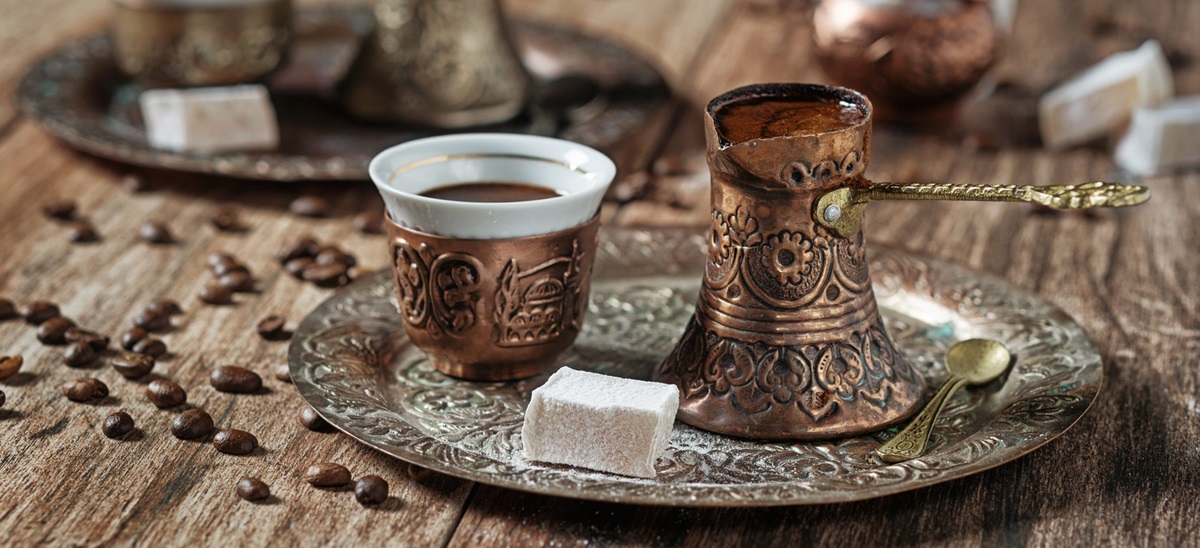
Svart – a slightly bitter drink with distinctive aroma and flavor.
During the inter-war years, some of Bucharest's cafés and restaurants became famous for their vibrant atmosphere and excellent ‘șvarț’.
Șvarț - from German ‘schwarz(-kaffee)’ or black(-coffee) -
was made from coffee substitutes such as chicory or roasted barley or from coffee and chicory, using the pour-over/drip method.
At the beginning of the 1940s, this affordable alternative to real coffee, which could be expensive or hard to find at times ,
got serious competition from the so-called Turkish coffee (made from chickpeas, millet, or fig seeds).
Today, the Svart is very hard to find in Romania as most people prefer expresso or filter-coffee.
Ironically, a Romanian entrepreneur may have contributed to the waning of the svart-drink:
Francesco Illy, inventor of illeta - considered the blueprint for the modern espresso machine (born in Timisoara in 1892).
However, the Svart remains a symbol of the inter-war period, evoking nostalgia for the times when Bucharest was nicknamed 'the Little Paris'.
Marghilomana:
a beverage named after political figure Alexandru Marghiloman (1854 – 1925),
a conservative leader and ex-prime minister.
One day, while out hunting, Marghiloman asked for a coffee. Lacking water, his butler asked permission to use brandy to prepare the coffee.
Marghiloman agreed and so "Marghilomana" was born.
Here is how the original 'Marghilomana' is prepared:
100 ml (3.5 fl.oz.) of Jamaica Rum or brandy are placed in a small, cooper, kettle and mixed with two teaspoons of sugar.
The kettle is dunked into a bed of hot sand (or ember) and brought to a boil, at low heat.
Three teaspoons of coffee are added, the kettle is covered, and left to rest until the ground coffee sinks to the bottom (about three minutes).
As alcohol does partially evaporate during cooking the resulting drink is not very strong and it has a unique flavor.
Marghilomana was traditionally served in a small, spoutless cup called 'filigeană'.
Marghiloman was one of the largest landowners in Romania.
Besides politics, his greatest passion was horses.
He founded the first equestrian center in Romania, complete with modern stables, qualified staff and a race-course
and is often referred to as "the father of Romanian equestrianism".
Alexandru Marghiloman Mansion (Conacul Marghiloman) in Buzau, his home-town, is today open to visitors.
Joffre - the chocolate ‘cylinder’,
a dessert created by Romanian confectioner Grigore Capșa and adopted, with open arms, by French confiseurs.
First prepared in 1920 to honor the visit to Romania of French Field Marshal Joseph Jacques Césaire Joffre,
the shape of this chocolate dessert is reminiscent of a French military helmet.
The ingredients used to this day are: petit-four/ langue de chat (pastry),
butter, sugar, eggs, flour, flavorings and, above all, cocoa of the highest quality,
all coated in a delicious chocolate glaze.
(historia.ro)
Joffre is still available in many cake shops including Cofetaria Capsa and Zexe Braserie - Zelateria .
Carolines
Rum soaked biscuit filled with lots of cocoa buttercream
and topped with whipped cream and shaved chocolate.
(created by confectioner Emil Frederic).
Currently not offered by cake shops in Romania.
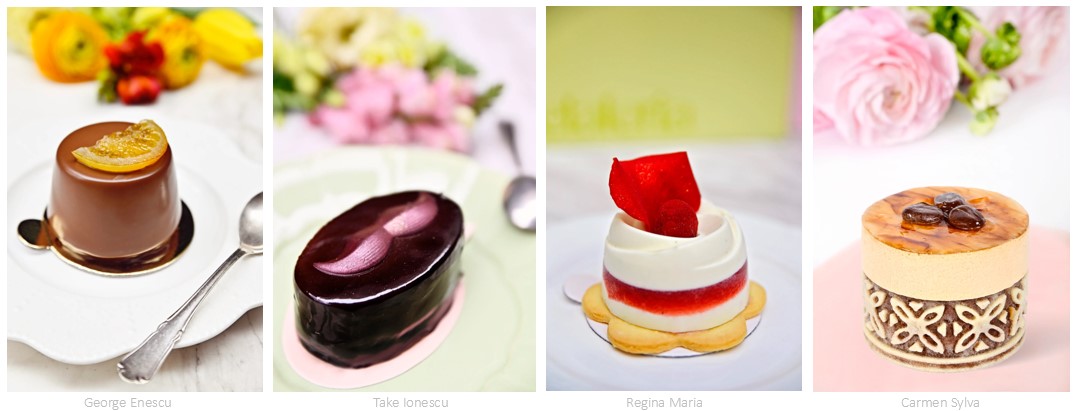
...
(Dale Peterson Business Insider).